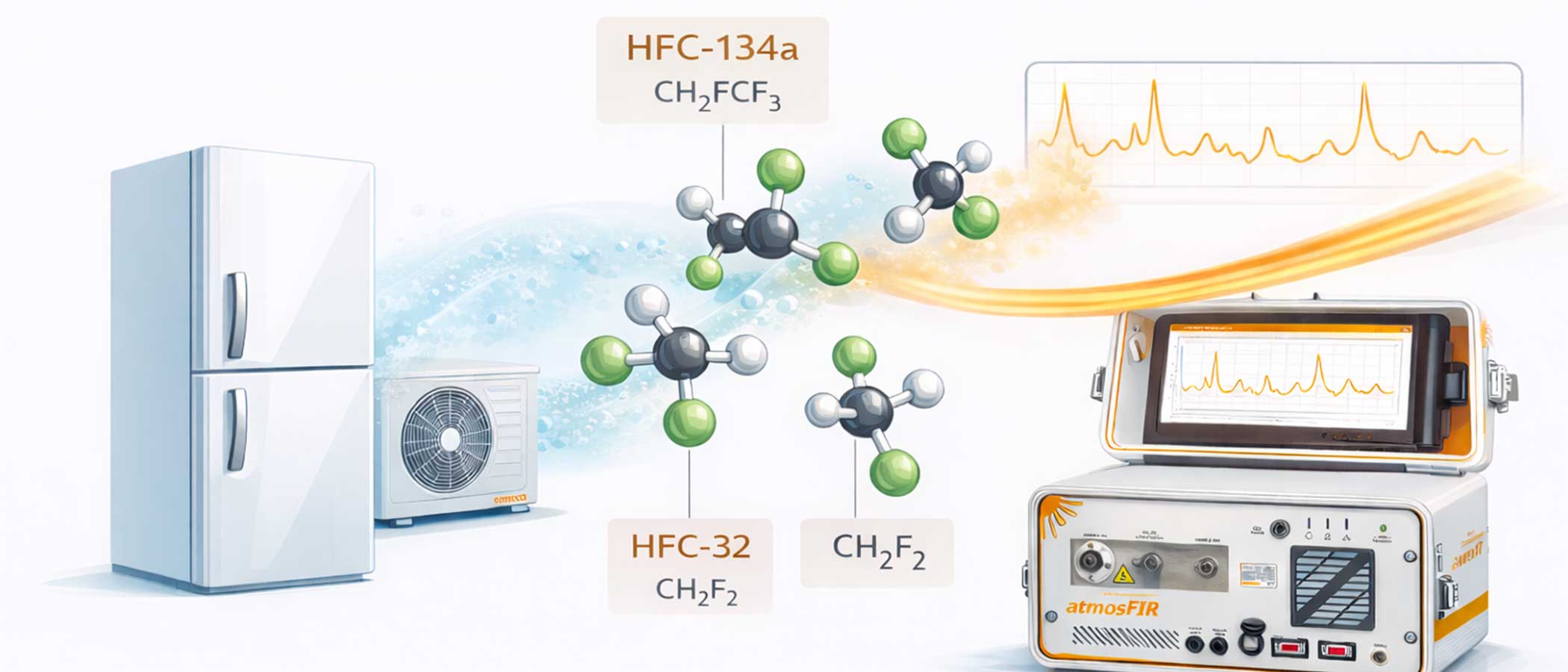
Protea’s atmosFIR FTIR gas analyser provides proven real-time identification and quantification of ozone depleting gases (ODGs) in ambient air using full-spectrum mid-infrared Fourier Transform Infrared (FTIR) spectroscopy.
This application supports continuous monitoring and survey measurements of low-level fugitive emissions from:
- Refrigeration and air-conditioning systems.
- Fire suppression systems
- Industrial facilities handling legacy ODGs or HFCs
- Indoor air quality and perimeter monitoring.
By analysing the complete infrared spectrum rather than isolated absorption bands, atmosFIR air enables compound-specific speciation and quantification of halogenated gases in complex atmospheric backgrounds.
Ozone Depleting Gases (ODG)
Ozone depleting gases are halogenated compounds containing fluorine, chlorine, and/or bromine. While many legacy ODGs are now regulated or phased out, they may still be present in existing equipment, stored systems, or waste streams. HFCs, while not ozone depleting, remain environmentally significant and are subject to emissions monitoring and control.
The table shows HFCs which are commonly associated with refrigeration and air-conditioning systems and are frequent targets for continuous ambient air monitoring and leak detection using the atmosFIR air FTIR analyser.
| Refrigerant Name | Chemical Name | CAS No |
|---|---|---|
| HFC-134a | 1,1,1,2-Tetrafluoroethane | 811-97-2 |
| HFC-32 | Difluoromethane | 75-10-2 |
| HFC-125 | Pentafluoroethane | 354-33-6 |
| HFC-143a | 1,1,1-Trifluoroethane | 420-46-2 |
| HFC-152a | 1,1-Difluoroethane | 75-37-6 |
| HFC-23 | Fluoroform | 75-46-7 |
| Typical HFC Targets for Ambient Monitoring | ||
Ambient Air Sampling Configuration
For ambient monitoring applications, atmosFIR air is configured with a non-heated extractive sampling system optimised for representative air measurement and long-term stability. A typical configuration includes:
- Ambient air inlet
- Particulate filter for dust and aerosols
- Sample pump and flow control
- Short, inert sampling line to minimise adsorption losses
This configuration supports both fixed monitoring installations and portable measurements for targeted leak investigation.
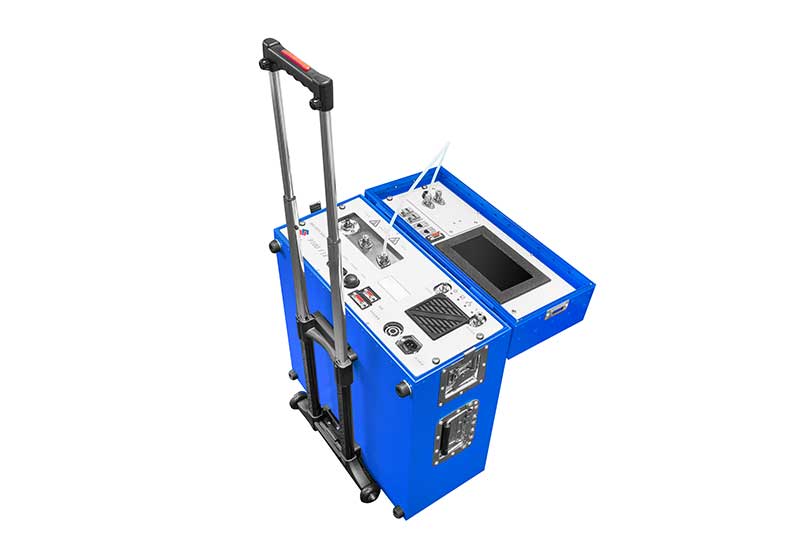
atmosFIR FTIR analyser for continuous ambient monitoring of halogenated gases, with integrated touchscreen and portable trolley design
Measurement with FTIR
Typical measurement ranges for ambient HFC monitoring are 0–5 ppm, with detection limits around 10 ppb for most target gases. This performance enables both continuous background monitoring and identification of low-level fugitive emissions in ambient air.
Halocarbon compounds, including HFCs and CFCs, are strong absorbers of infrared radiation due to molecular vibrations associated with C–F, C–H, and halogen–carbon bonds, producing intense absorption features in the mid-infrared region.
The infrared spectra of different halocarbons are highly distinct, particularly within the fingerprint region (approximately 700–1500 cm-1). Variations in molecular structure produce unique combinations of vibrational modes, allowing clear differentiation and speciation of individual compounds, even in complex gas mixtures.
Within the fingerprint region, several spectral sub-regions provide strong discriminatory power:
- 700–900 cm-1 – Halogen Deformation and C–Cl / C–Br modes
- 900–1100 cm-1 – Species-specific mixed C–F and skeletal vibrations
- 1100–1300 cm-1 – Strong C–F stretching bands driving low detection limits
- 1300–1500 cm-1 – Secondary C–F and combination bands aiding mixture resolution
atmosFIR typically operates at a spectral resolution of 1 cm-1, enabling fine spectral detail to be resolved. This high resolution is critical for reliable speciation of halocarbons with similar chemical structures and provides a significant advantage over lower-resolution where key fingerprint features may merge or be obscured.
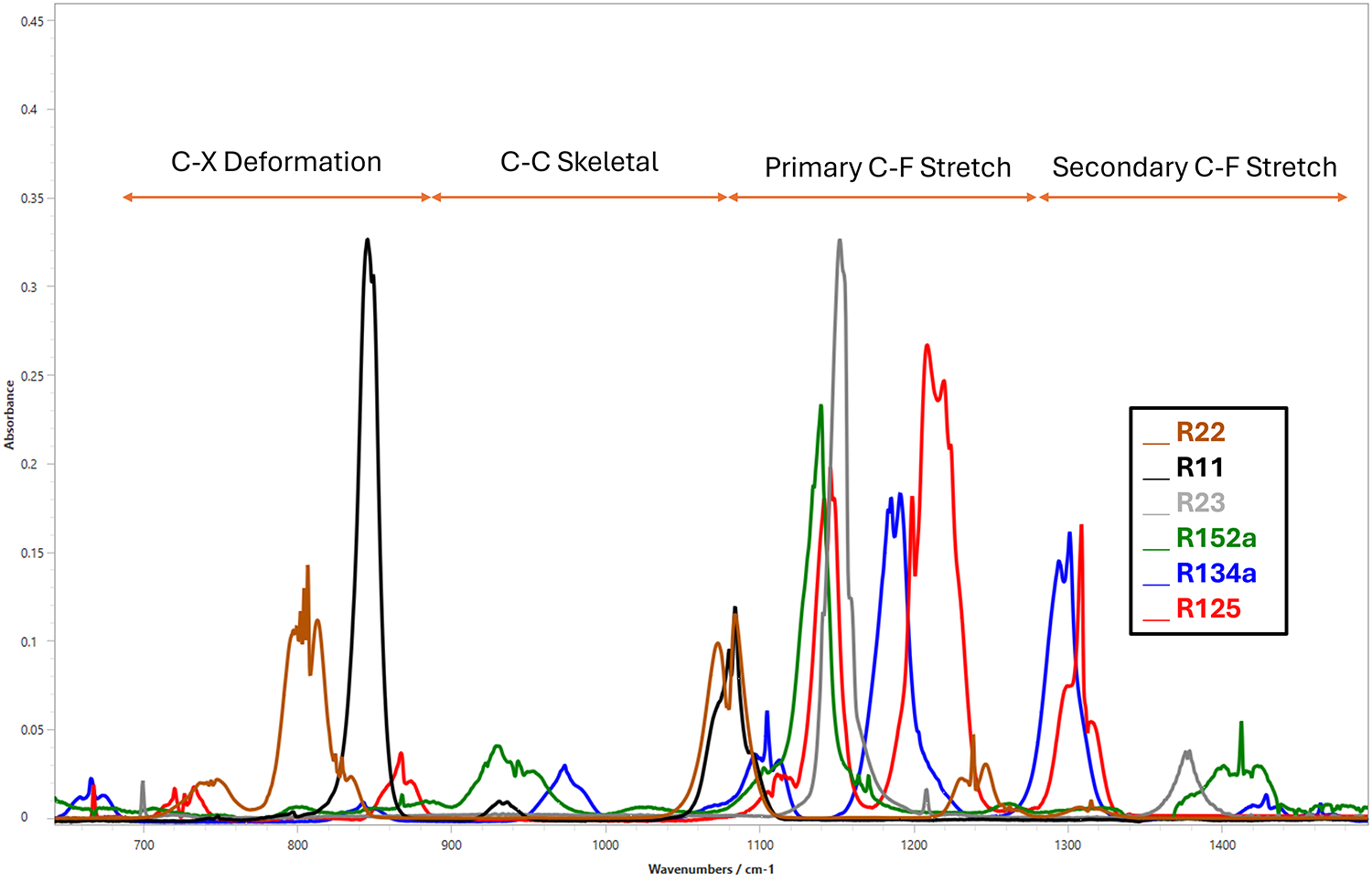
High-resolution IR spectra of selected halocarbons, showing distinct fingerprint-region features that enable speciation and quantification of complex gas mixtures using FTIR spectroscopy.
Why Choose atmosFIR?
- True multi-gas capability – One analyser measures multiple compounds simultaneously
- Compound-specific speciation – Identification based on unique infrared fingerprints
- Variable spectral resolution – 1 cm-1 resolution enables discrimination between similar molecules, lower resolution mode available with same hardware for fast scanning.
- Reduced cross-interference – Full-spectrum analysis and multivariate chemometric modelling corrects for overlaps and background gases
- Low detection limits – PPB level detection for many species enabled by strong infrared absorption
- Future-proof monitoring – New target gases added through calibration updates, no new hardware needed.
The atmosFIR FTIR gas analyser provides a flexible and robust solution for monitoring ozone depleting and fluorinated gases in ambient air.