
Carbon capture, utilisation and storage (CCUS) technologies are being deployed worldwide to reduce industrial CO2 emissions. Following capture and purification, the resulting CO2 product stream must meet strict purity specifications before transport, utilisation, or geological storage. Reliable monitoring of impurities in captured CO2 is essential as it can influence pipeline integrity, corrosion risk, and downstream utilisation processes. Protea’s atmosFIR FTIR gas analyser provides continuous multi-gas monitoring of impurities in CO2 product streams, enabling operators to verify CO2 purity, optimise purification processes, and ensure compliance with project-specific transport specifications.
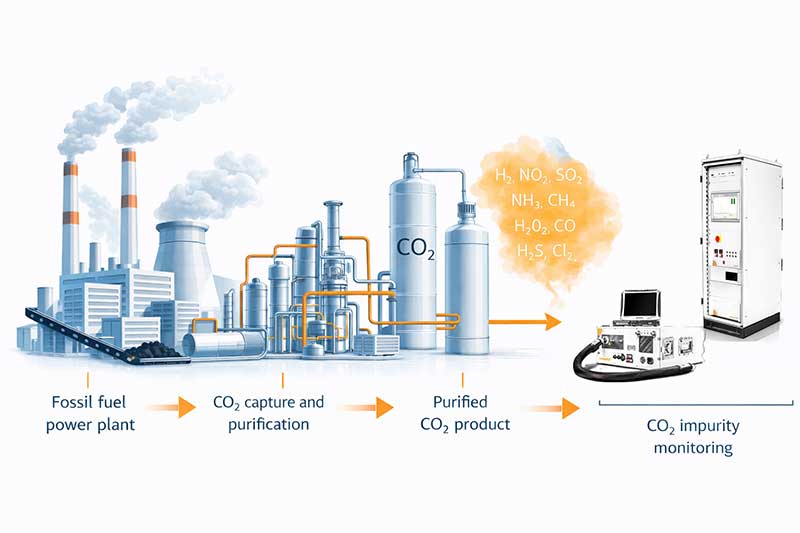
CO2 Purity Specifications in CCUS
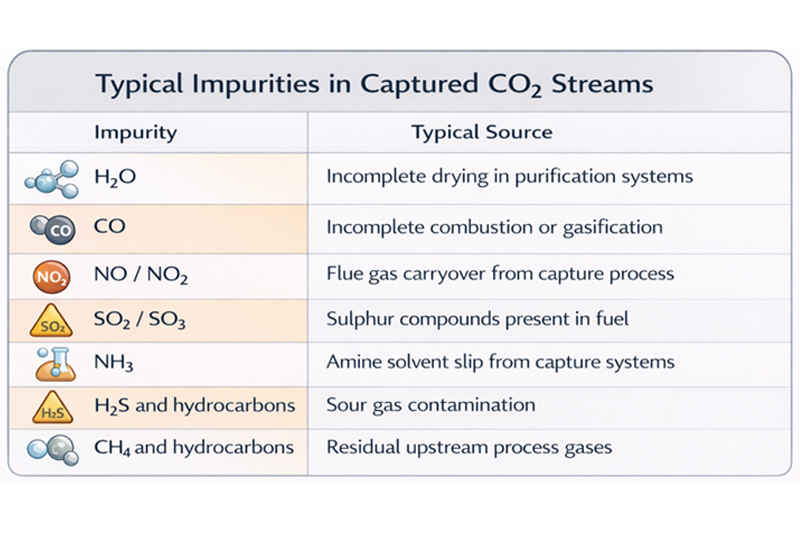
Captured CO2 streams can contain a range of residual contaminants depending on the capture technology and source process. Key contaminants are shown in the table. CO2 purity requirements vary between CCUS projects depending on transport infrastructure, storage reservoirs, and operational risk assessments. Specifications typically define maximum allowable concentrations of contaminants to prevent corrosion, hydrate formation, or operational issues.
Purity requirements of captured CO2 streams differ between projects, leading to a wide range of potential analytes. Monitoring systems must therefore be capable of measuring multiple gases across varying concentration limits. The atmosFIR analyser is fully configurable in software to match project-specific impurity specifications, enabling flexible monitoring across different CCUS installations.
Multi-Gas Monitoring Using FTIR
Fourier Transform Infrared (FTIR) spectroscopy measures the full mid-infrared absorption spectrum of the gas sample. Many impurity gases exhibit strong vibrational absorption bands in this region, producing distinct spectral fingerprints.
The analyser typically operates at spectral resolutions of 1 cm-1, allowing narrow spectral features to be clearly resolved. This high spectral resolution improves speciation capability compared with lower-resolution spectroscopic systems where overlapping absorption bands may reduce selectivity.
| Impurity | Typical Limit | FTIR Measurement Range | FTIR Detection Limit |
|---|---|---|---|
| CO | ≤100 ppm | 0–3000 ppm | ~0.5 ppm |
| CH4 | ≤100 ppm | 0–50,000 ppm | ~0.5 ppm |
| C2H6 | typically < 100 ppm | 0–50,000 ppm | ~0.5 ppm |
| C3H8 | typically < 100 ppm | 0–2,000 ppm | ~0.5 ppm |
| C4H10 | typically < 100 ppm | 0–2,000 ppm | ~0.5 ppm |
| NO | ≤1-10 ppm | 0–100 ppm | ~0.1 ppm |
| NO2 | ≤1-10 ppm | 0–100 ppm | ~0.1 ppm |
| SO2 | ≤10 ppm | 0–100 ppm | ~0.1 ppm |
| NH3 | ≤10 ppm | 0–100 ppm | ~0.1 ppm |
| Formaldahyde | typically <10 ppm | 0–50 ppm | ~0.1 ppm |
| HF | typically <10 ppm | 0–50 ppm | ~0.2 ppm |
| HCl | typically <10 ppm | 0–50 ppm | ~0.2 ppm |
| HCN | typically <10 ppm | 0–50 ppm | ~0.2 ppm |
| COS | typically<10 ppm | 0–10 ppm | ~1 ppm |
| CS2 | typically <10 ppm | 0–100 ppm | ~0.5 ppm |
| Total Aromatics | typically <10 ppm | 0–100 ppm | ~1 ppm |
| Total Amines | typically <10 ppm | 0–100 ppm | ~0.5 ppm |
| Alcohols | typically <10 ppm | 0–100 ppm | ~0.5 ppm |
| Glycol | typically <10 ppm | 0–100 ppm | ~0.5 ppm |
| Typical FTIR measurement suite for atmosFIR gas analyser. Typical concentration limits are based on published CO2 transport specifications such as the Northern Lights project. | |||
Protea’s chemometric modelling algorithms compensate for background gases such as CO2 and H2O, enabling stable impurity measurements under varying process conditions.
For accurate impurity measurement, calibration models are developed using gas mixtures prepared in a balance of CO2 rather than nitrogen or air. This ensures that spectral interactions and pressure broadening effects caused by the dominant CO2 matrix are correctly represented, improving measurement accuracy under real process condition.
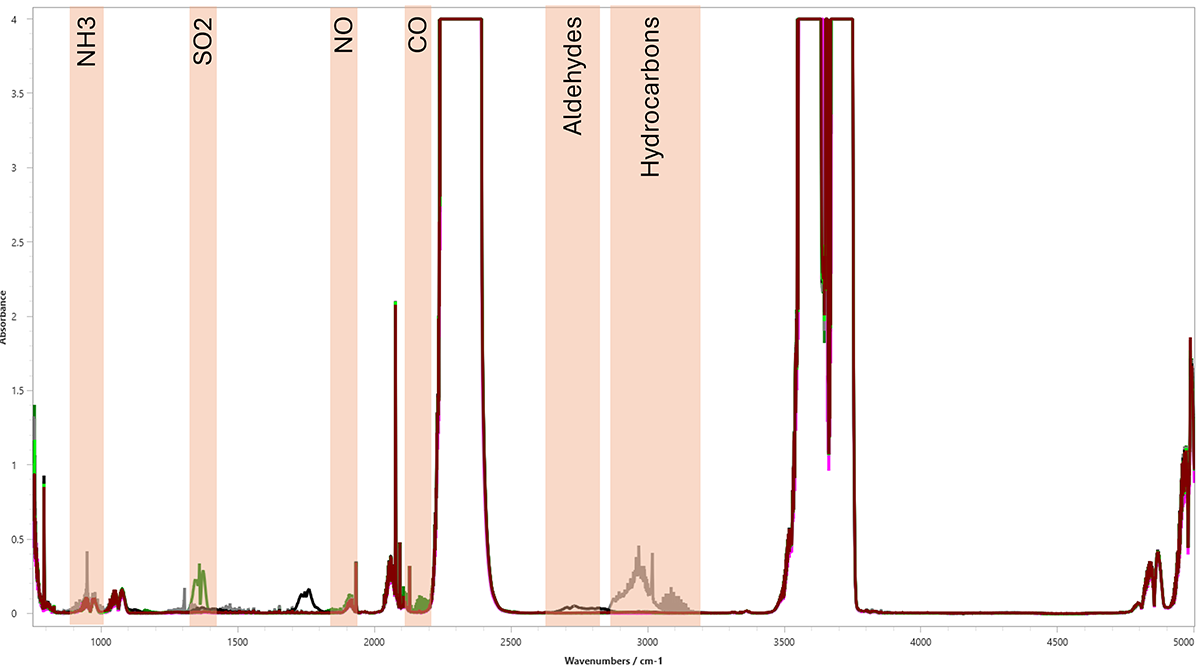
FTIR spectra of trace impurities in a CO2 background. Highlighted regions indicate characteristic absorption bands used for identification of key impurities.
Tech Comparison
Several analytical technologies are used to monitor impurities in CO2 streams, including gas chromatography, tuneable diode laser spectroscopy, electrochemical sensors, and FTIR spectroscopy.Gas chromatography provides detailed laboratory analysis but is typically used for periodic verification rather than continuous monitoring. Laser and electrochemical sensors provide fast measurements but usually monitor single gases per analyser. FTIR spectroscopy offers a unique advantage by measuring the entire infrared spectrum, allowing simultaneous measurement of multiple gases using a single analyser while providing the flexibility to update target gas lists through software configuration.
| Technology | Multi-Gas Measurement | Continuous Monitoring | Flexible Gas Configuration |
|---|---|---|---|
| FTIR | ✔ Simultaneous measurement | ✔ | ✔ Software configurable |
| Gas Chromatography | ✔ | ✘ Batch analysis | ✔ |
| TDLAS | ✘ Single gas | ✔ | ✘ |
| Electrochemical | ✘ Single gas | ✔ | ✘ |
Complementary technologies
While FTIR provides excellent multi-gas capability, some species are difficult to measure using infrared absorption alone. Diatomic molecules such as O2 and N2 do not absorb infrared radiation, while hydrogen sulphide exhibits relatively weak infrared absorption bands. Very low-level moisture measurement may also require dedicated analysers.
Protea therefore integrates complementary technologies including oxygen sensors, dedicated moisture analysers, and atmosUV UV-DOAS spectrometer for species such as Cl2 and H2S. These instruments can be integrated within the Protea cabinet and software to provide a comprehensive impurity monitoring solution.
Case Study: Detection of Unexpected Contaminants
atmosFIR FTIR has been demonstrated in real world CO2 product streams to provide valuable insights into process behaviour. In one monitoring campaign, atmosFIR was configured to measure a standard CCUS impurity list including CO, NOx, SO2, NH3 , Hydrocarbons and Amines.
The photo shows the atmosFIR transportable FTIR and PAS-Pro software configured for CO2 product impurities analysis being operated by SINTEF in the CO2 Laboratory at Tiller, Norway. Measurements were recorded from multiple sample points on a CO2 compression and liquefaction rig (CCLU). Live gas concentrations from the measurement campaign are also shown.
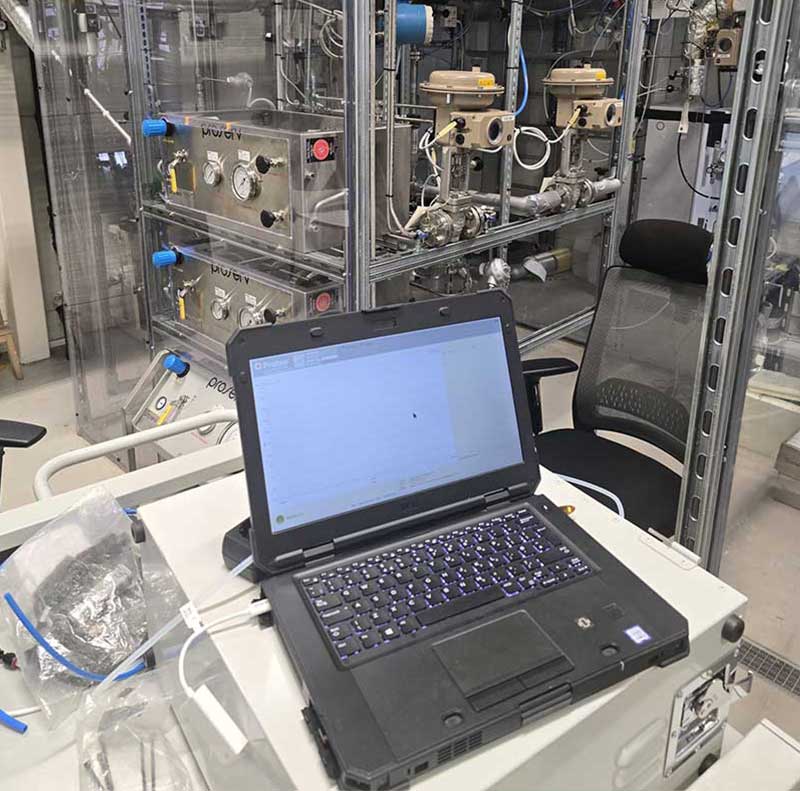
atmosFIR FTIR analyser installed for monitoring CO2 impurities on a CO2 compression and liquefaction rig (CCLU) at SINTEF
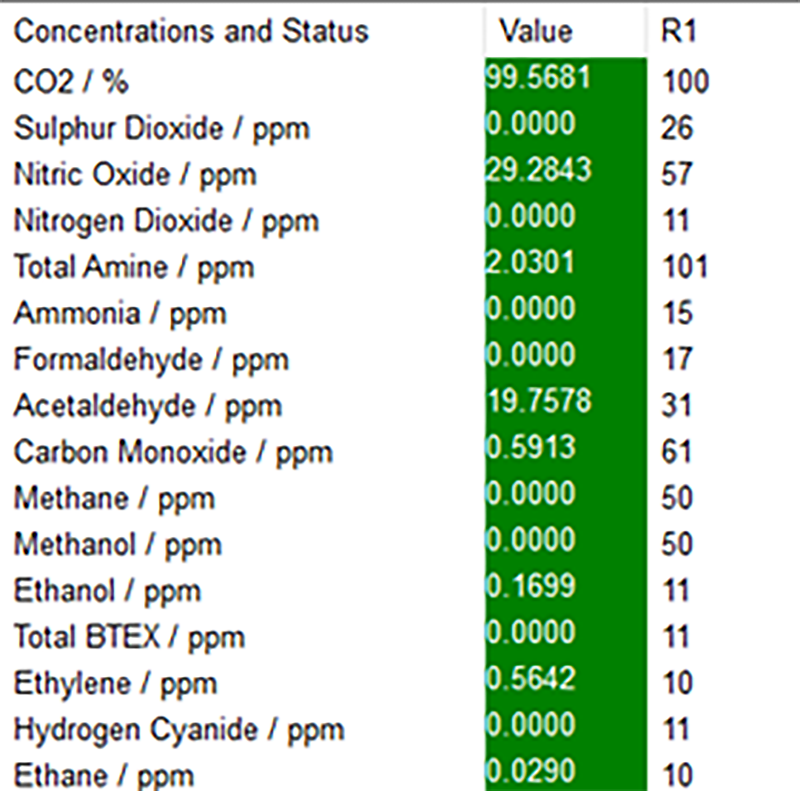
Live Impurities measured by atmosFIR in captured CO2 product at SINTEF
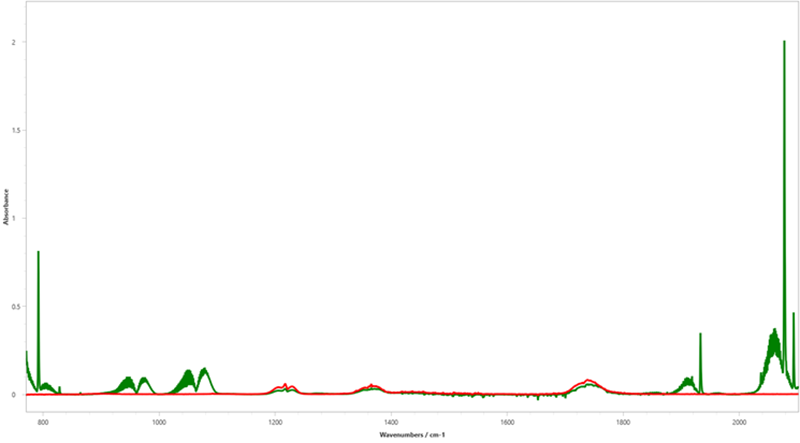
During operation, Protea’s spectral QC check detected inconsistencies in the measured spectra. Although concentration trends appeared stable, analysis of the spectral residuals revealed additional absorption features not associated with the configured gas list.
Further expert spectral analysis identified acetone as a contaminant in the CO2 product stream. Because FTIR records the full infrared spectrum, the stored data allowed retrospective identification of the compound without additional instrumentation. The measurement model was subsequently updated to include acetone, enabling continuous monitoring of the contaminant.
This example highlights a key advantage of FTIR spectroscopy: the ability to detect unexpected Spectral identification of acetone contamination detected during FTIR monitoring. contaminants and perform retrospective spectral analysis using stored measurement data.
atmosFIR for CCUS Monitoring
The atmosFIR FTIR gas analyser provides a robust and flexible platform for monitoring impurities in captured CO2 streams across a wide range of CCUS applications including capture plants, hydrogen production facilities, bioenergy with carbon capture, and CO2 transport infrastructure.By combining FTIR spectroscopy with complementary measurement technologies, Protea delivers integrated gas analysis solutions that help operators maintain CO2 product quality, protect infrastructure, and ensure compliance with CCUS transport specifications.