Rising Methane Emissions Put Maritime Monitoring In The Spotlight
29
New European shipping data has highlighted a significant shift in the maritime emissions landscape, with reported methane emissions rising sharply in 2025 while CO2 emissions remained comparatively stable. Analysis of EU Monitoring, Reporting and Verification (MRV) data indicates that reported methane emissions from shipping increased by approximately 30% in 2025, from around 66,000 tonnes to 85,000 tonnes. Over the same period, reported CO2 emissions increased much more modestly, from approximately 148 million tonnes to 151 million tonnes.
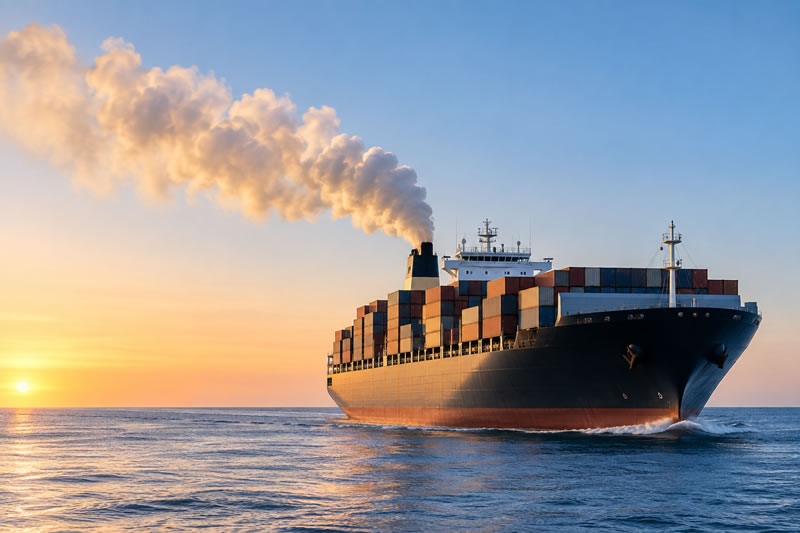
The figures arrive at an important moment for the maritime sector, as European emissions regulation expands beyond its traditional focus on carbon dioxide. Methane moves up the maritime agenda. The growing use of LNG and other methane-containing fuels has made methane an increasingly important consideration for vessel operators, regulators and emissions-monitoring specialists.
Although LNG can offer benefits in reducing certain conventional air pollutants and CO2 emissions compared with some traditional marine fuels, attention is increasingly turning to methane slip, unburned methane that can escape through the engine and exhaust system.
Methane is a particularly potent greenhouse gas, meaning relatively small quantities can have a significant climate impact. As a result, understanding actual methane emissions is becoming an increasingly important part of assessing the environmental performance of alternative marine fuels.
However, the reported 30% increase needs to be considered in context. The number of vessels covered by the EU MRV system also increased in 2025 following an expansion of its scope to additional vessel categories. The figures therefore should not be interpreted as demonstrating a 30% increase across an identical fleet of vessels. What they do demonstrate is the growing importance of methane within Europe's maritime emissions picture.
EU ETS expands beyond CO2 The timing is significant. Since 2024, maritime operators covered by the EU MRV regulation have been required to monitor and report emissions of carbon dioxide (CO2), methane (CH4) and nitrous oxide (N2O). The EU Emissions Trading System is now taking the next step. From 2026, methane and nitrous oxide are included
At the same time, the maritime sector's overall exposure to the EU ETS continues to increase as the system completes its phased introduction. This creates a much closer relationship between a vessel's greenhouse gas emissions, the accuracy of the data used to quantify them and the financial implications for operators.
From estimating emissions to understanding the exhaust
The changing regulatory landscape raises an important question for the maritime industry: how accurately do operators understand what is actually coming from their vessels exhausts? As alternative fuels and new propulsion technologies are introduced, emissions profiles can become more complex. Measuring CO2 alone may no longer provide a complete picture. Methane slip, N2O and other exhaust components can vary according to factors including engine technology, fuel composition, operating conditions, engine load and after-treatment performance.
Reliable emissions measurement can therefore provide more than a route to regulatory compliance. It can help operators understand real-world vessel performance, identify unexpected emissions, evaluate new fuels and technologies, and provide credible data to support decarbonisation decisions. For equipment manufacturers and technology developers, accurate measurement is equally important when demonstrating the environmental performance of new solutions.
Measurement becomes increasingly important
For Protea, the developments reinforce a principle that has long underpinned emissions monitoring: effective emissions reduction starts with reliable measurement. As maritime decarbonisation accelerates, the industry is moving into an era where operators need to understand a broader range of gases, across increasingly diverse fuels and operating conditions. The sharp rise in reported methane emissions provides a timely reminder that reducing CO2 does not necessarily tell the whole emissions story.
With CH4 and N2O now joining CO2 within the EU ETS, robust measurement and monitoring will become increasingly important in helping the maritime sector demonstrate compliance, understand the true impact of alternative fuels and make informed decisions about future technologies. For shipowners and operators, the message is becoming clear: as the emissions landscape changes, what you can accurately measure matters.
#MaritimeEmissions #EmissionsMonitoring #MethaneEmissions #EUETS #MaritimeDecarbonisation #CEMS #Shipping #AlternativeFuels #EmissionsData #MarineEmissions #MeasurementTechnology #Protea
Other Articles
Three Months Into UK ETS Maritime & Emissions Data Moves To The Heart Of Shipping Compliance
15
EU ETS Reforms Put Emissions Measurement Firmly In Focus
01
Europe Places Maritime Competitiveness At The Centre Of New Industrial Strategy
13
UK Maritime ETS Enters Compliance Phase
01
Ammonia Emissions Under Scrutiny & The Role of Advanced Monitoring In Addressing UK Pollution Hotspots
20
The EU Emissions Trading System ETS In A Nutshell
02
Rising Carbon Costs Drive The Need For Accurate Emissions Management In European Shipping
26
Carbon Capture Utilisation & Storage (CCUS) In 2026
16
Global Underground CO2 Storage Data Offers Hope Amid Rising Emissions
01