Three Months Into UK ETS Maritime & Emissions Data Moves To The Heart Of Shipping Compliance
15
Three months after the UK Emissions Trading Scheme was extended to domestic maritime transport, the focus for ship operators is shifting from preparing for the new regime to demonstrating that the emissions data underpinning compliance is accurate, robust and verifiable.
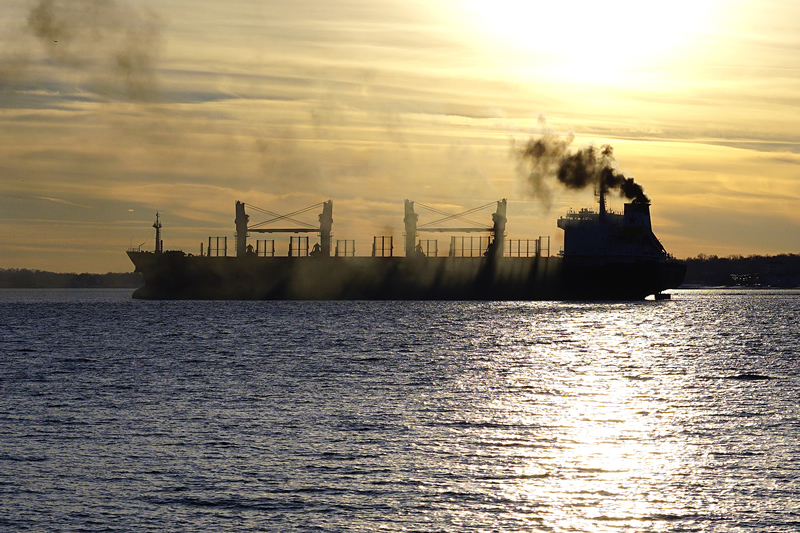
The expansion of the UK Emissions Trading Scheme (UK, ETS) to maritime activities on 1 July 2026 marked a significant change for the UK shipping industry. For the first time, qualifying domestic maritime activity has been brought directly into the UK's carbon trading framework, placing a financial value on greenhouse gas emissions and introducing a new set of monitoring, reporting and verification responsibilities for operators.
As the scheme approaches the end of its first quarter, the question is no longer whether maritime operators are ready for UK ETS. They are already generating the data that will form their first compliance reports. And for companies such as Protea, which specialises in emissions measurement technology, that puts the quality of emissions monitoring firmly in the spotlight.
From preparation to real-world monitoring
The first UK ETS maritime scheme year runs from 1 July to 31 December 2026, meaning operators are currently part-way through their first mandatory monitoring period. The initial scope covers ships of 5,000 gross tonnage and above, regardless of flag, undertaking qualifying domestic maritime activities. It encompasses domestic voyages between UK ports as well as relevant emissions generated within UK ports.
Operators entering the scheme must establish an account using the government's METS – Manage your emissions trading scheme reporting service and apply for an emissions monitoring plan within 42 days of beginning their first UK ETS maritime activity. Three months on, this means many of the operators that entered the scheme at launch should have moved beyond initial onboarding and monitoring-plan preparation and into the practical business of collecting compliance data.
That transition is significant.
The figures being collected today will ultimately feed into operators' first annual emissions reports, which must be independently verified and submitted by 31 March 2027.
UK ETS goes beyond CO2
One of the most important features of the UK scheme from an emissions-monitoring perspective is that the requirements extend beyond carbon dioxide. Operators must monitor emissions of CO2, methane (CH4)) and nitrous oxide (N2)) arising from maritime activities within the scope of UK ETS. These emissions are expressed as CO2 equivalent for the purposes of the scheme. That broader greenhouse-gas focus comes as the maritime industry explores an increasingly diverse range of fuels and propulsion technologies in an effort to decarbonise.
For example, greater use of LNG has increased industry attention on methane slip, where unburned methane can be released through the engine and exhaust. Alternative fuels and different combustion technologies can also introduce different emissions profiles.
Consequently, looking at CO2 alone may not always provide the complete picture of a vessel's greenhouse-gas performance. For shipowners, engine manufacturers and technology developers, understanding what is actually happening within the exhaust stream is therefore becoming increasingly valuable.
Verification is the next milestone
The next major challenge for operators will be turning months of operational information into emissions reports capable of standing up to independent verification. UKAS expects much of the verification activity associated with the first reporting period to take place between October 2026 and March 2027. UKAS has also been working to extend the accreditation scope of verification bodies ahead of this first reporting cycle.
The Environment Agency is already encouraging operators to prepare early, giving themselves sufficient time to appoint an independent UKAS-accredited verifier, complete verification, correct errors or misstatements and meet the 31 March reporting deadline. This makes the final quarter of 2026 an important period for the sector. It is one thing to collect emissions information. It is another to demonstrate that the methodologies, processes and underlying data used to produce those figures are sufficiently robust for regulatory reporting.
Emissions data now has a financial consequence
The significance of measurement becomes clearer when the carbon-market element is considered. For each tonne of CO2 equivalent in an operator's emissions figure for surrender, one UK allowance must ultimately be surrendered. Operators have been given additional time during the introduction of maritime UK ETS. Allowances relating to both the 2026 and 2027 scheme years do not have to be surrendered until 30 April 2028.
That breathing space should not obscure the commercial importance of the emissions being recorded now. The first monitoring period is already building an emissions liability that operators will eventually have to address through allowances. As a result, accurate emissions information isn't simply an environmental reporting issue. It increasingly has a financial value.
The role of measurement in maritime decarbonisation
For Protea, the first three months of UK ETS Maritime highlight a broader development taking place across shipping. Environmental regulation is moving beyond simply setting emissions limits. Increasingly, operators need high-quality emissions information to demonstrate compliance, understand the greenhouse-gas performance of different fuels and technologies, and support investment decisions.
Reliable measurement can also help operators investigate discrepancies between calculated and real-world performance, assess combustion and after-treatment technologies, and better understand emissions such as CH4) and N2) as the fuel mix evolves. The principle is straightforward: you cannot effectively manage what you cannot reliably measure. UK ETS therefore has the potential to make emissions intelligence increasingly important to commercial decision-making as well as regulatory compliance.
Six months that could shape the years ahead
The first UK ETS maritime reporting period lasts just six months, but it represents an important foundation for what follows. From 1 January 2027, maritime operators move into the first full calendar-year scheme period. Offshore ships are also scheduled to enter the scheme from 2027, further extending its reach. For operators currently within scope, however, attention is likely to turn increasingly towards the quality of the information accumulated since July and readiness for verification.
Three months into the regime, UK ETS Maritime has moved from policy into operational reality. For the emissions-monitoring industry, that transition carries a clear message: as carbon regulation becomes more sophisticated and encompasses CO2, methane and nitrous oxide, confidence in the measurement behind the numbers will matter more than ever. For Protea, that is where advanced emissions measurement technology can play an important role – helping the maritime industry move from simply reporting its environmental impact towards understanding it.
#UKETS #MaritimeEmissions #EmissionsMonitoring #MaritimeDecarbonisation #CEMS #MethaneEmissions #Shipping #MarineEmissions #EmissionsData #GreenhouseGas #MeasurementTechnology #Protea
Other Articles
Rising Methane Emissions Put Maritime Monitoring In The Spotlight
29
EU ETS Reforms Put Emissions Measurement Firmly In Focus
01
Europe Places Maritime Competitiveness At The Centre Of New Industrial Strategy
13
UK Maritime ETS Enters Compliance Phase
01
Ammonia Emissions Under Scrutiny & The Role of Advanced Monitoring In Addressing UK Pollution Hotspots
20
The EU Emissions Trading System ETS In A Nutshell
02
Rising Carbon Costs Drive The Need For Accurate Emissions Management In European Shipping
26
Carbon Capture Utilisation & Storage (CCUS) In 2026
16
Global Underground CO2 Storage Data Offers Hope Amid Rising Emissions
01