EU Explores Marine Carbon Technologies As Measurement Takes Centre Stage
10
The European Commission is considering whether emerging marine carbon dioxide removal technologies could become part of the EU's official carbon removal certification framework, signalling growing interest in the potential role of ocean-based solutions in tackling climate change.
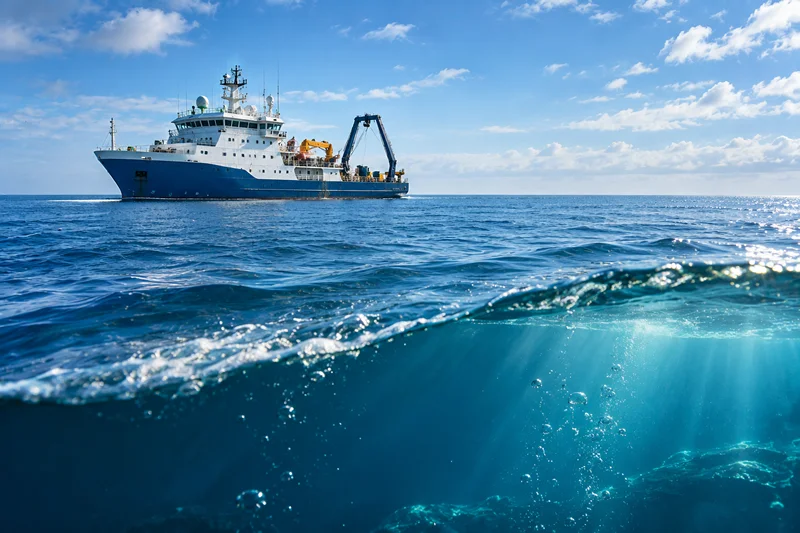
The development comes as European policymakers investigate new approaches to removing carbon dioxide (CO2) from the atmosphere, alongside existing efforts to reduce greenhouse gas emissions across industry, transport and energy production.
However, significant scientific and technical questions remain, particularly around how effectively marine carbon removal technologies work, how their environmental impacts can be assessed and how the amount of CO2 removed can be accurately measured and verified.
Exploring the Potential of Ocean-Based Carbon Removal
The oceans already play a vital role in regulating the Earth's climate by absorbing substantial quantities of atmospheric carbon dioxide. Marine carbon dioxide removal (mCDR) technologies aim to enhance or utilise natural ocean processes to increase the amount of CO2 removed from the atmosphere.
Among the approaches being investigated are ocean alkalinity enhancement and direct ocean capture. Ocean alkalinity enhancement involves increasing the alkalinity of seawater, potentially improving its capacity to absorb atmospheric CO2.
Direct ocean capture uses engineered processes to extract dissolved carbon dioxide from seawater, creating conditions that may allow the ocean to absorb additional atmospheric CO2. Both approaches are attracting interest as potential contributors to long-term climate objectives, although their effectiveness, environmental consequences and commercial scalability require further research.
European Commission Considers Carbon Removal Certification
The European Commission is examining whether marine carbon removal methods could be incorporated into the EU's Carbon Removals and Carbon Farming Certification Framework.
The framework is intended to establish consistent standards for assessing and certifying carbon removal activities, helping ensure that reported removals are credible, measurable and independently verified. Including marine technologies could eventually provide a clearer route towards recognising eligible ocean-based carbon removal projects.
However, the Commission has not yet confirmed whether these methods will be included. Questions surrounding measurement accuracy, environmental impacts, long-term carbon storage and verification remain central to the assessment. The development highlights the importance of establishing reliable scientific evidence before emerging carbon removal technologies can become part of recognised environmental certification systems.
Accurate Measurement Remains a Major Challenge
One of the most significant challenges facing marine carbon removal is demonstrating how much atmospheric CO2 has genuinely been removed. Unlike conventional emissions monitoring, which focuses on measuring gases released from a particular source, carbon removal verification must consider a wider range of environmental processes.
For marine applications, this can involve understanding changes in seawater chemistry, the exchange of CO2 between the atmosphere and ocean, and the long-term behaviour of carbon within marine environments.
Researchers must also consider whether the removal process creates additional emissions elsewhere and whether any unintended environmental impacts could affect the overall benefits. This makes monitoring, reporting and verification particularly complex.
Reliable measurement information, supported by appropriate scientific modelling and environmental assessment, will be essential if marine carbon removal technologies are to demonstrate credible climate benefits.
The Role of Advanced Gas Analysis in Environmental Research
As interest in carbon removal technologies increases, so does the importance of dependable analytical measurement. Advanced gas analysis technologies can provide valuable information for research and development activities, particularly where understanding gas concentrations, investigating process conditions and monitoring changes over time are important.
For engineered carbon removal systems, accurate CO2 measurement may form one part of a broader monitoring strategy. However, marine carbon removal verification requires more than gas analysis alone, with ocean chemistry, environmental sampling and modelling also playing important roles.
The development of reliable measurement methods will therefore be an essential consideration as researchers and technology developers investigate the potential of these emerging solutions.
Protea Supporting Advanced Environmental Gas Analysis
At Protea, we recognise the importance of accurate gas measurement in supporting environmental research, industrial innovation and the development of cleaner technologies. Our advanced gas analysis solutions help organisations identify and quantify gases, investigate changing concentrations and obtain valuable information about their processes and operating environments.
Using technologies including Fourier Transform Infrared (FTIR) spectroscopy, Protea provides analytical capabilities for a range of industrial and environmental measurement applications. These technologies can support specialist investigations where detailed gas composition information and dependable measurement data are required.
As new carbon management and environmental technologies emerge, access to appropriate analytical equipment will remain important for understanding process performance and supporting research activities.
The Future of Marine Carbon Removal
The European Commission's consideration of marine carbon removal technologies reflects the increasing attention being given to solutions that could complement conventional emissions reduction strategies.
Although reducing greenhouse gas emissions remains essential, carbon removal technologies may also have a role in addressing residual emissions and supporting longer-term climate objectives.
For marine carbon removal, the immediate priority is establishing the scientific evidence, monitoring methods and environmental safeguards needed to demonstrate that these approaches deliver genuine and lasting benefits. Whether the technologies ultimately become part of the EU's certification framework will depend on further technical assessment and policy decisions.
What is already clear is that accurate measurement, transparent reporting and reliable environmental data will remain fundamental to the development of credible carbon removal solutions.
To discover more about Protea's advanced gas analysis and environmental measurement technologies, visit www.protea.ltd.uk or contact our team at sales@protea.ltd.uk.
#Protea #MarineCarbonRemoval #CarbonRemoval #CarbonDioxideRemoval #CO2Monitoring #CarbonCapture #EnvironmentalMonitoring #GasAnalysis #FTIR #ClimateTechnology #EnvironmentalInnovation #CarbonManagement #CarbonNeutrality #NetZero #ClimateResearch #EUClimatePolicy #GreenTechnology #EmissionsReduction #Sustainability #CarbonRemovalTechnology
Other Articles
Shipping Emissions Linked to Almost $1 Trillion In Global Economic Damage
06
European Shipowners Call for Greater Investment in Maritime Decarbonisation as Carbon Costs Rise
22
European Ports Accelerate Decarbonisation As Emissions Monitoring Takes Centre Stage
12
Maritime Emissions Monitoring Set For Change As EU Proposes Major Reforms
05
Three Months Into UK ETS Maritime & Emissions Data Moves To The Heart Of Shipping Compliance
15
Rising Methane Emissions Put Maritime Monitoring In The Spotlight
29
EU ETS Reforms Put Emissions Measurement Firmly In Focus
01
Europe Places Maritime Competitiveness At The Centre Of New Industrial Strategy
13
UK Maritime ETS Enters Compliance Phase
01