UK Carbon Capture Strategy Update For The Coming Year
24
The UK's carbon capture industry is facing renewed financial uncertainty following changes to government funding, placing greater emphasis on project efficiency, commercial viability and the ability to demonstrate measurable environmental performance.
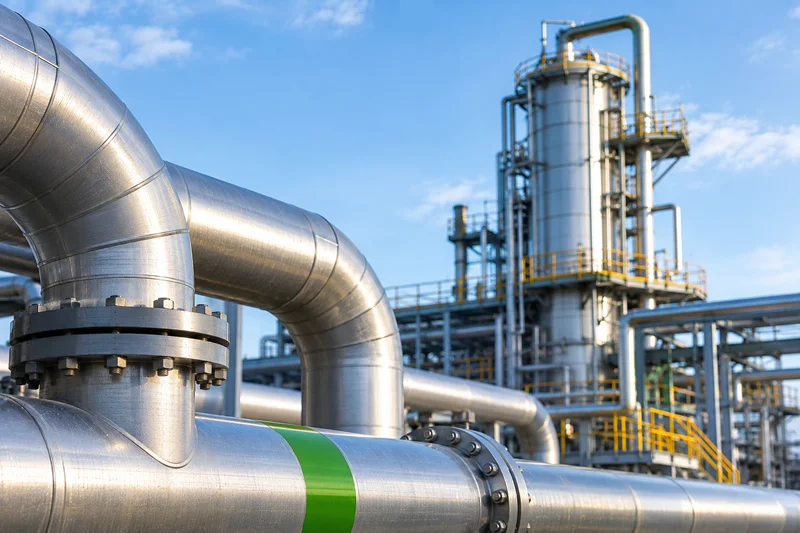
Carbon Capture, Utilisation and Storage (CCUS) technologies are regarded as an important part of the UK's industrial decarbonisation strategy, particularly for sectors where reducing carbon dioxide (CO2) emissions through electrification or alternative energy sources can be challenging.
However, recent government announcements have highlighted the financial pressures surrounding the development of large-scale carbon capture infrastructure and the need for projects to demonstrate their long-term economic and environmental benefits.
Government Funding Changes Create New Challenges
At the Carbon Capture and Storage Association's annual conference in October 2026, government representatives warned that future financial support for the industry would need to reflect increasingly difficult public spending decisions.
The government reaffirmed its support for carbon capture technology but indicated that investment would need to be prioritised, with greater attention given to project costs, delivery schedules and value for money. These concerns were reinforced in the UK Budget on 28 October 2026, which included a reduction in planned funding for carbon capture and hydrogen projects.
The previously announced £200 million capital grant for Scotland's Acorn carbon capture project was withdrawn, while funding commitments for the HyNet and East Coast Cluster projects were maintained. The changes highlight the increasingly selective approach being taken towards public investment in emerging low-carbon technologies.
For project developers, the challenge is to continue progressing towards commercial deployment while managing funding uncertainty and demonstrating that carbon capture can deliver measurable emissions reductions at an acceptable cost.
Carbon Capture Remains Important for Industrial Decarbonisation
Despite the financial challenges, carbon capture continues to be considered an important technology for reducing emissions from certain industrial processes.
Industries such as cement production, chemicals and other energy-intensive manufacturing activities can generate CO2 emissions that are difficult to eliminate through conventional energy efficiency measures alone. Carbon capture systems are designed to separate CO2 from industrial gas streams before it enters the atmosphere, allowing the captured gas to be transported for utilisation or long-term geological storage.
However, the performance of these systems depends on several factors, including capture efficiency, energy consumption, gas composition and the effectiveness of associated processing equipment. As projects progress from development and demonstration towards commercial operation, understanding these factors becomes increasingly important.
Accurate Gas Analysis Supports Carbon Capture Performance
One of the fundamental requirements of an effective carbon capture installation is the ability to measure and understand gas concentrations throughout the process. Monitoring gas streams before and after capture can provide valuable information about CO2 removal efficiency, helping operators assess how effectively their systems are performing.
However, CO2 is not the only gas requiring attention. Depending on the capture process, operators may also need to monitor amines, ammonia, nitrogen oxides, sulphur compounds and other potential contaminants. For amine-based capture technologies, monitoring emissions of amine compounds and their derivatives is particularly important when assessing environmental performance.
The purity of captured CO2 is another essential consideration. Residual impurities can affect downstream processing, transport infrastructure and storage operations, making reliable gas analysis an important part of maintaining product quality.
As carbon capture developers seek to improve efficiency and reduce operating costs, access to accurate and consistent measurement data can support process optimisation, performance investigations and environmental management.
Protea Supporting Carbon Capture Through Advanced Gas Analysis
Protea provides specialist gas analysis technologies for carbon capture and storage applications, supporting both research activities and industrial monitoring requirements. Our solutions include advanced Fourier Transform Infrared (FTIR) gas analysis systems capable of identifying and quantifying multiple gas components within complex process streams.
Protea's atmosFIR FTIR gas analyser is particularly relevant to CCUS applications, providing multi-gas measurement capabilities for monitoring impurities within captured CO2 streams.
The technology can help operators investigate gas composition, assess purification performance and identify contaminants that may affect downstream processes. Protea also provides measurement solutions for carbon capture efficiency assessment, amine emissions monitoring and other specialist gas analysis applications.
Our experience includes supporting research into emerging carbon capture technologies and providing analytical measurement capabilities for applications involving CO2 processing and storage.
As the industry faces increasing pressure to demonstrate operational efficiency and environmental performance, dependable gas analysis remains an important part of understanding how carbon capture systems operate.
The Future of UK Carbon Capture
The latest funding developments highlight the challenges facing an industry that requires substantial investment to move from early-stage projects towards widespread commercial deployment.
While government support remains an important factor, the longer-term development of carbon capture will also depend on technological progress, operational efficiency and the ability to demonstrate meaningful emissions reductions.
For developers and industrial operators, reliable measurement information will remain essential when assessing capture performance, investigating process conditions and evaluating the effectiveness of new technologies.
As the UK continues to develop its approach to industrial decarbonisation, advanced gas analysis will play a valuable role in supporting the technical development and operation of carbon capture systems.
To discover more about Protea's gas analysis technologies for Carbon Capture and Storage applications, visit www.protea.ltd.uk/carbon-capture-and-storage-ccs.
#Protea #CarbonCapture #CarbonCaptureAndStorage #CCUS #CCS #CarbonCaptureTechnology #GasAnalysis #FTIR #atmosFIR #CO2Monitoring #EmissionsMonitoring #IndustrialDecarbonisation #EnvironmentalMonitoring #CarbonCaptureEfficiency #AmineEmissions #NetZero #CleanTechnology #UKIndustry
Other Articles
EU Explores Marine Carbon Technologies As Measurement Takes Centre Stage
10
Shipping Emissions Linked to Almost $1 Trillion In Global Economic Damage
06
European Shipowners Call for Greater Investment in Maritime Decarbonisation as Carbon Costs Rise
22
European Ports Accelerate Decarbonisation As Emissions Monitoring Takes Centre Stage
12
Maritime Emissions Monitoring Set For Change As EU Proposes Major Reforms
05
Three Months Into UK ETS Maritime & Emissions Data Moves To The Heart Of Shipping Compliance
15
Rising Methane Emissions Put Maritime Monitoring In The Spotlight
29
EU ETS Reforms Put Emissions Measurement Firmly In Focus
01
Europe Places Maritime Competitiveness At The Centre Of New Industrial Strategy
13
UK Maritime ETS Enters Compliance Phase
01