European Ports Accelerate Decarbonisation As Emissions Monitoring Takes Centre Stage
12
European ports are undergoing a significant transformation as the maritime industry responds to tighter environmental regulations, the transition to cleaner fuels and increasing pressure to reduce greenhouse gas emissions.
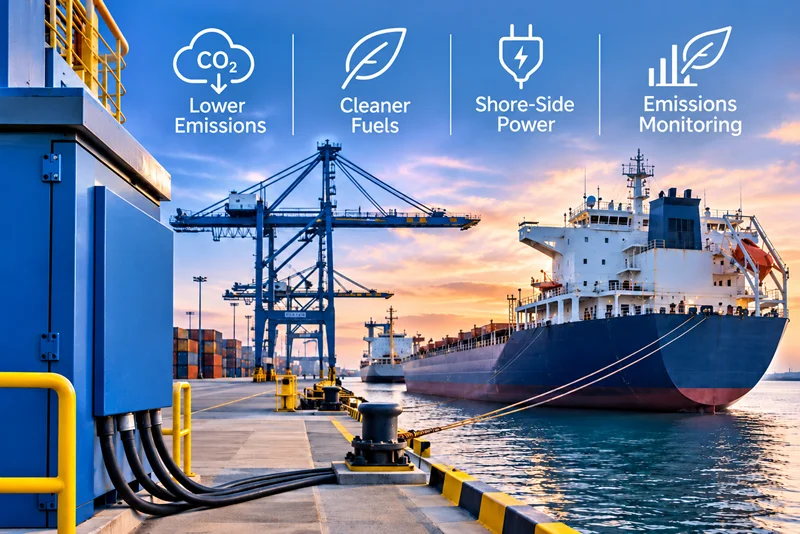
Traditionally focused on cargo handling and logistics, ports are increasingly becoming centres for renewable energy, alternative fuel infrastructure and environmental innovation.
From shore-side electricity supplies to hydrogen and ammonia facilities, these developments are changing how ports operate and creating new challenges for emissions monitoring, gas detection and environmental measurement.
New Regulations Driving Cleaner Port Operations
European environmental legislation is playing a major role in accelerating this transition. The EU Emissions Trading System (EU ETS), FuelEU Maritime Regulation and Alternative Fuels Infrastructure Regulation (AFIR) are encouraging shipping companies and port operators to reduce emissions, improve energy efficiency and invest in cleaner technologies.
FuelEU Maritime introduces progressively tighter greenhouse gas intensity requirements for energy used by ships, beginning with a 2% reduction target in 2025 and increasing to 80% by 2050.
Meanwhile, requirements for shore-side electricity are encouraging ports to develop infrastructure that allows qualifying vessels to connect to electrical power while berthed, reducing reliance on onboard auxiliary engines. However, achieving these ambitions requires considerable investment in electrical networks, renewable energy generation and alternative fuel facilities.
Alternative Fuels Bring New Monitoring Challenges
As ports prepare to accommodate cleaner marine fuels, hydrogen, ammonia, methanol and bio-LNG are becoming increasingly important considerations. Although these fuels offer opportunities to reduce the maritime industry's environmental impact, they also introduce different operational and safety requirements.
Ammonia, for example, presents significant toxicity risks, making appropriate leak detection and gas monitoring essential for storage and bunkering operations. Methane emissions from LNG infrastructure are another important consideration, with European regulations placing greater emphasis on emissions measurement, reporting and leak detection.
As ports diversify their energy infrastructure, reliable gas analysis technologies will have an increasingly important role in understanding emissions, investigating gas mixtures and supporting environmental monitoring activities.
Accurate Gas Analysis Supports Environmental Progress
Reducing emissions is only part of the challenge. Understanding and measuring them is equally important. Ports and terminal operators need reliable environmental information to assess operational changes, investigate potential emissions sources and evaluate the effectiveness of decarbonisation initiatives.
This is particularly relevant as facilities introduce new fuels, modify industrial processes and develop more complex energy infrastructure. Advanced gas analysis technologies, including Fourier Transform Infrared (FTIR) spectroscopy, can provide valuable insights by identifying and quantifying multiple gases within a sample.
For environmental professionals and industrial operators, access to accurate measurement data can help support investigations, improve process understanding and inform decisions about emissions management.
How Protea Supports Advanced Gas Analysis
At Protea, we recognise the growing importance of accurate, dependable gas measurement as industries adapt to changing environmental requirements. Our advanced FTIR gas analysis technologies are designed to help organisations identify and quantify gases across a range of industrial and environmental applications.
With solutions for emissions monitoring, process gas analysis and investigative measurement, Protea supports organisations seeking greater insight into gas compositions and changing operating conditions.
As European ports continue to develop cleaner energy infrastructure, technologies capable of providing detailed gas measurement information could play an increasingly valuable role in environmental investigations and industrial monitoring.
The Future of Cleaner European Ports
The decarbonisation of European ports is a long-term transformation involving significant investment, technological development and regulatory change. Major ports, including Rotterdam, Antwerp-Bruges and Hamburg, are progressing with renewable energy, electrification and alternative fuel infrastructure, while smaller ports face additional challenges around funding, grid capacity and implementation.
As these developments continue, effective environmental monitoring will remain an important part of understanding operational impacts and supporting informed decisions. For organisations working towards cleaner, more efficient industrial operations, access to reliable gas analysis technology will be an important consideration.
To discover more about Protea's advanced gas analysis and emissions monitoring technologies, visit www.protea.ltd.uk or contact our team at sales@protea.ltd.uk.
#PortDecarbonisation #MaritimeEmissions #EmissionsMonitoring #GasAnalysis #CEMS #EnvironmentalMonitoring #GreenShipping #AlternativeFuels #MethaneMonitoring #IndustrialEmissions #CleanEnergy #Protea
Other Articles
EU Explores Marine Carbon Technologies As Measurement Takes Centre Stage
10
Shipping Emissions Linked to Almost $1 Trillion In Global Economic Damage
06
European Shipowners Call for Greater Investment in Maritime Decarbonisation as Carbon Costs Rise
22
Maritime Emissions Monitoring Set For Change As EU Proposes Major Reforms
05
Three Months Into UK ETS Maritime & Emissions Data Moves To The Heart Of Shipping Compliance
15
Rising Methane Emissions Put Maritime Monitoring In The Spotlight
29
EU ETS Reforms Put Emissions Measurement Firmly In Focus
01
Europe Places Maritime Competitiveness At The Centre Of New Industrial Strategy
13
UK Maritime ETS Enters Compliance Phase
01