Maritime Emissions Monitoring Set For Change As EU Proposes Major Reforms
5
Proposed changes to European maritime emissions regulations could reshape how shipping operators monitor greenhouse gases, manage environmental data and approach decarbonisation, placing renewed emphasis on accurate measurement and reliable emissions monitoring technologies.
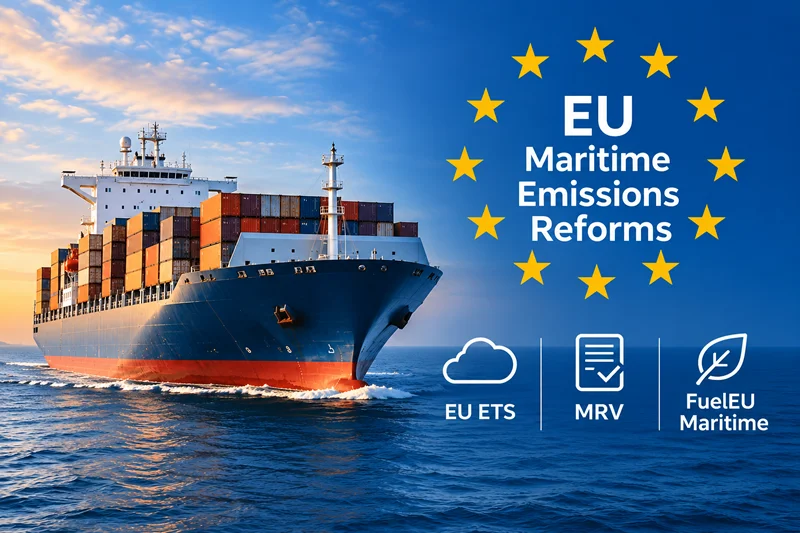
The European Commission has outlined a series of proposed reforms to the EU Emissions Trading System (EU ETS), maritime Monitoring, Reporting and Verification (MRV) requirements and FuelEU Maritime regulations.
Introduced in July 2026, the proposals aim to strengthen Europe's approach to reducing greenhouse gas emissions, simplify regulatory reporting and extend environmental obligations to additional vessels operating within European waters.
For the maritime industry, these developments could bring significant changes to emissions monitoring and reporting practices, creating new challenges and opportunities for shipping operators, offshore businesses and environmental monitoring specialists.
Understanding the Proposed Maritime Emissions Reforms
The EU ETS has applied to emissions from large ships entering European ports since January 2024, introducing financial obligations linked to greenhouse gas emissions. Alongside this framework, maritime MRV requirements establish how emissions data is monitored, reported and verified, while FuelEU Maritime focuses on reducing the greenhouse gas intensity of energy used by vessels.
The latest European Commission proposals seek to bring these regulatory frameworks into closer alignment, supporting more consistent reporting and encouraging investment in cleaner maritime technologies. Among the most significant proposals are:
- Expanding EU ETS coverage: Extending emissions trading requirements to specified vessels between 400 and 5,000 gross tonnage from 2031.
- Simplifying emissions reporting: Bringing EU ETS, MRV and FuelEU reporting processes into a more unified compliance framework.
- Increasing offshore vessel coverage: Introducing activity-based criteria that could bring additional offshore support vessels within the regulations.
- Supporting cleaner maritime technologies: Establishing a proposed €15 billion Sustainable Maritime Alternative Propulsion (SMAP) funding mechanism to encourage decarbonisation.
- Strengthening environmental accountability: Improving the consistency of emissions data and supporting the EU's wider greenhouse gas reduction objectives.
Although these changes remain proposals and are subject to the European legislative process, they indicate the direction of future maritime environmental policy.
Greater Focus on Greenhouse Gas Monitoring
One of the most important developments for the maritime industry is the growing range of greenhouse gases covered by European emissions regulations. While carbon dioxide (CO2) has traditionally been the primary focus of maritime emissions reporting, the EU ETS expanded from January 2026 to include methane (CH4) and nitrous oxide (N2O).
This development reflects the importance of understanding the broader greenhouse gas impact of shipping activities. As operators investigate alternative fuels, improve vessel efficiency and introduce new emissions reduction technologies, understanding the composition and behaviour of emitted gases becomes increasingly valuable.
Accurate measurement can support emissions investigations, provide insight into operational performance and help organisations evaluate the effectiveness of environmental improvements. With additional vessel categories potentially entering the regulatory framework, the importance of reliable emissions information is likely to increase.
Why Accurate Gas Analysis Matters
The maritime industry's transition towards lower-emission operations creates a growing need for dependable environmental information. Understanding emissions is not simply a matter of measuring a single gas. Different fuel types, combustion conditions and operating processes can produce complex mixtures of gases that require detailed investigation.
Advanced gas analysis technologies can provide valuable insight into these mixtures, helping operators and environmental specialists understand gas concentrations, investigate unexpected emissions and assess changes in operating conditions.
As maritime regulations continue to evolve, technologies capable of delivering accurate, repeatable and meaningful measurement information will remain important tools for environmental assessment and process understanding.
Protea's Expertise in Advanced Gas Analysis and Emissions Monitoring
At Protea, we recognise the importance of reliable gas analysis in helping industries understand their emissions and respond to changing environmental requirements. Our advanced gas analysis technologies are designed to support a wide range of industrial and environmental monitoring applications, providing detailed measurement information to help organisations investigate gas compositions and understand process conditions.
These capabilities are particularly relevant to applications involving combustion gases, industrial emissions and environmental investigations, where accurate gas identification and concentration measurements are essential.
As the maritime sector continues to explore alternative fuels, emissions reduction strategies and new monitoring approaches, advanced analytical technologies can provide useful information to support research, development and operational investigations.
Importantly, the suitability of any measurement technology for formal maritime regulatory reporting depends on the specific application and applicable monitoring requirements. Protea's expertise in multi-gas analysis can support technical discussions around these challenges and help organisations explore appropriate measurement solutions.
Supporting the Transition Towards Cleaner Maritime Operations
The proposed European reforms highlight a wider shift towards greater environmental accountability across the maritime industry. With emissions trading obligations expanding, reporting frameworks potentially becoming more closely integrated and investment in cleaner technologies increasing, shipping operators will need to consider how they collect, interpret and use environmental data.
Reliable emissions information can help organisations identify opportunities for improvement, investigate operational changes and better understand the environmental performance of their activities.
Advanced gas analysis also has an important role to play in evaluating new technologies and investigating the characteristics of different fuels and combustion processes. As the industry works towards lower greenhouse gas emissions, access to dependable measurement data will remain an essential part of informed environmental decision-making.
Looking Ahead: The Future of Maritime Emissions Monitoring
The European Commission's proposed reforms represent another important stage in the development of maritime environmental regulation. While the final requirements and implementation timetable will depend on the outcome of the legislative process, the direction is clear: the maritime industry is moving towards more comprehensive emissions accountability and closer integration of environmental monitoring and reporting.
For shipping operators, offshore businesses and environmental specialists, keeping pace with these developments will be increasingly important. At Protea, we remain committed to developing and supplying advanced gas analysis technologies that help organisations gain a clearer understanding of the gases present within their processes and environments.
Whether investigating complex gas mixtures, evaluating emissions or exploring new monitoring applications, our team can help you identify suitable gas analysis technologies for your requirements.
To learn more about Protea's advanced FTIR gas analysis and emissions monitoring solutions, visit www.protea.ltd.uk or contact our team at sales@protea.ltd.uk.
#Protea #MaritimeEmissions #EUETS #FuelEUMaritime #EmissionsMonitoring #GasAnalysis #FTIR #GreenhouseGasMonitoring #EnvironmentalMonitoring #MaritimeIndustry #ShippingEmissions #Decarbonisation #MethaneMonitoring #EnvironmentalCompliance #CleanShipping
Other Articles
EU Explores Marine Carbon Technologies As Measurement Takes Centre Stage
10
Shipping Emissions Linked to Almost $1 Trillion In Global Economic Damage
06
European Shipowners Call for Greater Investment in Maritime Decarbonisation as Carbon Costs Rise
22
European Ports Accelerate Decarbonisation As Emissions Monitoring Takes Centre Stage
12
Three Months Into UK ETS Maritime & Emissions Data Moves To The Heart Of Shipping Compliance
15
Rising Methane Emissions Put Maritime Monitoring In The Spotlight
29
EU ETS Reforms Put Emissions Measurement Firmly In Focus
01
Europe Places Maritime Competitiveness At The Centre Of New Industrial Strategy
13
UK Maritime ETS Enters Compliance Phase
01